
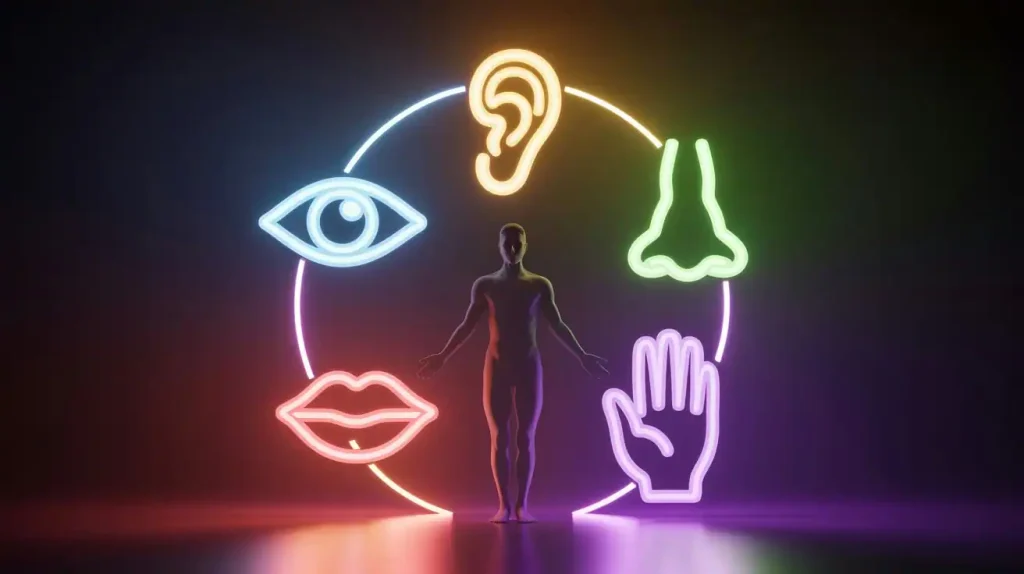
Human senses shape how we experience the world, yet they are far from perfect or complete. What we see, hear, feel, taste, and smell is only a small part of reality. These surprising facts reveal how our senses work in unexpected ways.
The Limits of Perception
- Humans can only detect a small portion of the electromagnetic spectrum.
- Our hearing range is limited compared to many animals.
- The brain filters out most sensory information to avoid overload.
- What we perceive is a constructed version of reality, not a direct copy.
Sight and Vision
- The human eye can distinguish millions of colors under ideal conditions.
- There is a blind spot in each eye where no visual information is detected.
- The brain fills in missing visual details without awareness.
- Vision can be influenced by expectations and prior knowledge.
Hearing and Sound
- The brain can focus on a single voice in a noisy environment.
- Sounds can influence emotions even without conscious attention.
- Silence often contains subtle background noise that we ignore.
Taste and Smell
- Taste is strongly influenced by smell rather than just the tongue.
- Humans can recognize thousands of different odors.
- Flavor perception can change based on temperature and texture.
Touch and Sensory Integration
- The sense of touch includes pressure, temperature, and pain.
- The brain combines information from multiple senses to create a full experience.
- Sensory perception can adapt over time, improving sensitivity in certain conditions.
Human senses are powerful but limited tools for understanding the world. Recognizing their boundaries helps us see reality in a more thoughtful and curious way.