
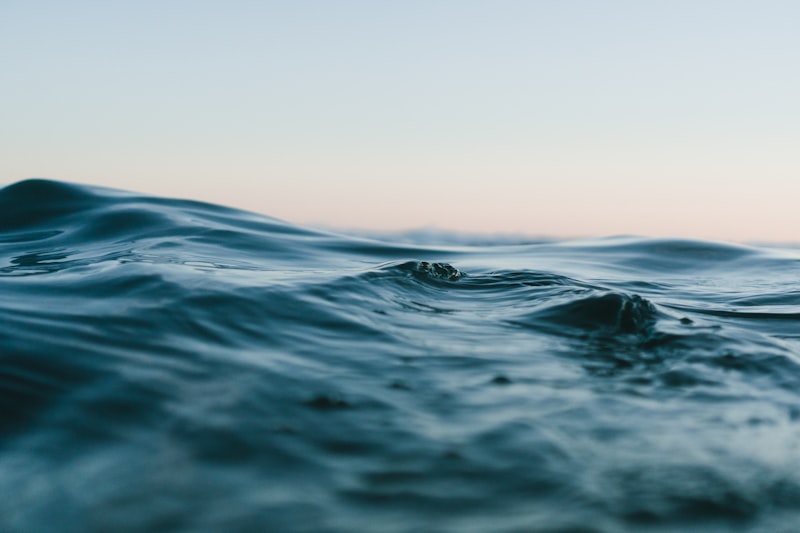
More than 80% of the ocean remains unexplored, and what we have discovered is both fascinating and terrifying. From crushing pressures to alien-like creatures, the deep ocean holds secrets that defy imagination.
The Abyssal Unknown
1. More than 80% of the global ocean remains unexplored and unmapped. We have better maps of the surface of Mars and the Moon than we do of our own ocean floor. The reason is simple: water absorbs electromagnetic radiation, making satellite mapping ineffective beyond the surface. Detailed mapping requires sonar-equipped ships, a slow and expensive process that has covered only about 20% of the seafloor at high resolution.
2. The Mariana Trench is the deepest known point in Earth's oceans, plunging to approximately 11,034 meters (36,201 feet) at its deepest point, the Challenger Deep. If Mount Everest were placed at the bottom of the trench, its peak would still be more than 2 kilometers underwater. The pressure at this depth is over 1,000 times standard atmospheric pressure -- equivalent to having about 50 jumbo jets stacked on top of you.
3. Only four people have ever visited the Challenger Deep: Jacques Piccard and Don Walsh in 1960, filmmaker James Cameron in 2012, and explorer Victor Vescovo in 2019. By comparison, 12 people have walked on the Moon. The extreme engineering challenges of deep-sea exploration -- immense pressure, total darkness, and near-freezing temperatures -- make it arguably more difficult than space travel.
Extreme Conditions
4. At depths below 200 meters, sunlight cannot penetrate the water, creating a realm of perpetual darkness known as the aphotic zone. Below 1,000 meters, the ocean is in complete and absolute darkness. Temperatures hover between 0 and 4 degrees Celsius, and the only natural light comes from bioluminescent organisms that produce their own glow through chemical reactions.
5. Hydrothermal vents on the ocean floor spew superheated, mineral-rich water at temperatures exceeding 400 degrees Celsius (750 degrees Fahrenheit). The water does not boil because the immense pressure at these depths raises the boiling point far beyond 100 degrees Celsius. These vents support entire ecosystems that exist independently of sunlight, with bacteria converting chemicals from the vents into energy through chemosynthesis -- a process that may mirror how life first evolved on Earth.
6. Brine pools are underwater 'lakes' of extremely salty water that form on the ocean floor. Because the brine is denser than surrounding seawater, it forms distinct pools with visible shorelines and waves. These pools are so toxic that any creature that swims into them can go into toxic shock and die. The shores of brine pools are often littered with the preserved bodies of unfortunate deep-sea creatures.
Terrifying Creatures
7. The giant squid (Architeuthis dux) can grow up to 13 meters (43 feet) long and has eyes the size of dinner plates -- the largest eyes in the animal kingdom, measuring up to 27 centimeters across. These enormous eyes help the squid detect the faint bioluminescence of sperm whales, their primary predator, in the pitch-black depths. The first footage of a live giant squid in its natural habitat was not captured until 2012.
8. The anglerfish uses a bioluminescent lure -- a glowing bulb of bacteria dangling from a modified dorsal spine above its mouth -- to attract prey in the darkness. The female anglerfish can swallow prey up to twice her own size thanks to an expandable stomach and hinged jaw. In some species, the much smaller male anglerfish permanently fuses to the female's body, becoming a parasitic appendage that provides sperm in exchange for nutrients from her bloodstream.
9. The goblin shark, often called a 'living fossil,' has remained virtually unchanged for 125 million years. Its most disturbing feature is its extendable jaw, which can shoot forward to snatch prey at high speed -- a mechanism completely unique among sharks. With its pinkish-gray skin, elongated snout, and nail-like teeth, the goblin shark looks like something from a nightmare.
Ocean Mysteries
10. The 'bloop' was an ultra-low-frequency underwater sound detected by NOAA hydrophones in 1997 that was louder than any known animal could produce. For years, it fueled speculation about massive unknown sea creatures. Scientists eventually determined it was most likely caused by an icequake -- a large iceberg cracking and fracturing -- but the mystery captivated the public imagination and highlighted how little we know about the deep ocean.
11. Whalefalls -- the carcasses of dead whales that sink to the ocean floor -- create temporary ecosystems that can last for decades. A single whale fall can support an entire community of specialized deep-sea creatures, including bone-eating worms (Osedax) that secrete acid to burrow into whale bones and extract nutrients. Some species discovered at whalefalls have never been found anywhere else on Earth, suggesting that the deep ocean may harbor countless undiscovered life forms adapted to these rare, nutrient-rich events.