
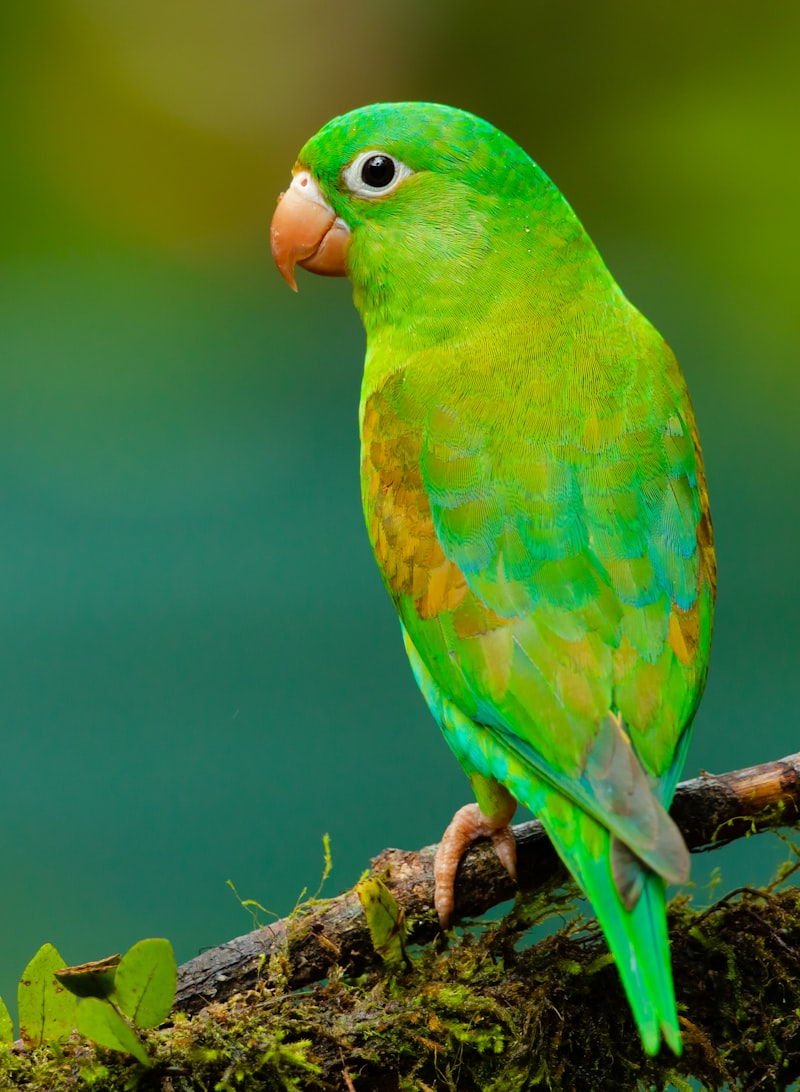
Explore 12 fascinating facts that reveal the undeniable dinosaur ancestry of modern birds, from T-Rex relatives to the incredible intelligence of crows.
The Dinosaur-Bird Connection
1. Birds are the only living descendants of dinosaurs. Specifically, they evolved from a group of two-legged theropod dinosaurs, the same group that includes the mighty Tyrannosaurus rex. Genetic analysis shows that the closest living relative of the T-Rex is actually the humble chicken.
2. In 2003, scientists recovered soft tissue and proteins from a 68-million-year-old T-Rex femur. When they sequenced the collagen proteins, they found sequences matching modern chickens and ostriches more closely than any other living creatures — molecular proof of the bird-dinosaur connection.
3. The discovery of Archaeopteryx in 1861 provided the first fossil evidence linking birds to dinosaurs. This 150-million-year-old creature had feathers and wings like a bird, but also teeth, a long bony tail, and claws on its wings like a dinosaur — a perfect transitional fossil that Charles Darwin called one of the most important discoveries in evolutionary biology.
Feathers and Flight
4. Many non-avian dinosaurs had feathers. The discovery of feathered dinosaur fossils in China's Liaoning Province, including species like Sinosauropteryx and Microraptor, revealed that feathers evolved long before flight — they likely first served as insulation and for display purposes.
5. Modern birds share over 50 anatomical features with theropod dinosaurs, including hollow bones, a wishbone (furcula), three-toed feet, and a unique respiratory system with air sacs that allows for unidirectional airflow — making birds far more efficient breathers than mammals.
6. The peregrine falcon is the fastest animal on Earth, reaching diving speeds of over 389 kilometers per hour. This incredible speed evolved from the hunting adaptations of their theropod ancestors, whose lightweight, aerodynamic bodies and sharp vision were already optimized for pursuit predation.
Bird Intelligence and Behavior
7. Crows and ravens belong to the corvid family and possess intelligence rivaling that of great apes. New Caledonian crows can craft tools from twigs and leaves, solve multi-step puzzles, and even recognize individual human faces for years — cognitive abilities that suggest dinosaur intelligence may have been underestimated.
8. Some birds, like the African grey parrot, can learn vocabularies of over 1,000 words and use them in proper context. Alex, a famous African grey studied by Dr. Irene Pepperberg, could identify colors, shapes, quantities, and even express frustration — demonstrating cognitive abilities once thought unique to primates.
9. The common pigeon can recognize itself in a mirror, a test of self-awareness that only a handful of species pass, including elephants, dolphins, and great apes. Pigeons can also distinguish between paintings by Monet and Picasso, and can be trained to detect breast cancer in medical images with accuracy rivaling trained pathologists.
Evolutionary Marvels
10. The hoatzin, a bird found in the Amazon, is born with functional claws on its wings — an evolutionary throwback to its dinosaur ancestors. Young hoatzins use these claws to climb trees before they can fly, and the claws disappear as they mature, providing a living glimpse into the dinosaur-to-bird transition.
11. Birds retain the genes for teeth. In 2006, scientists successfully triggered tooth growth in chicken embryos by activating dormant genetic pathways, proving that birds still carry the genetic blueprint for dinosaur teeth, silenced over millions of years of evolution.
12. The largest bird ever to exist was the elephant bird of Madagascar, standing 3 meters tall and weighing up to 500 kilograms. Its eggs were 160 times the volume of a chicken egg — yet even this giant pales in comparison to some of its dinosaur ancestors like the T-Rex, which weighed up to 9,000 kilograms.