
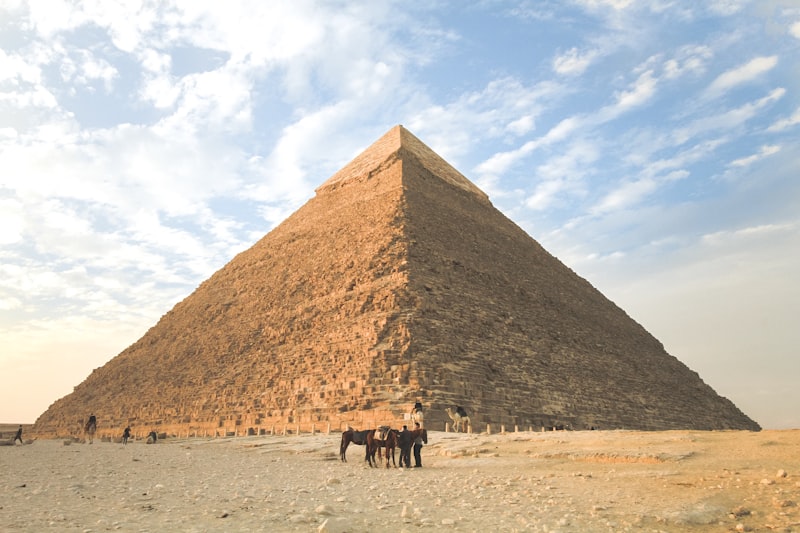
From Gobekli Tepe to the Indus Valley —ancient civilizations were far more advanced than textbooks suggest.
Surprising Ancient Truths
1. Gobekli Tepe in Turkey was built around 9600 BCE —over 7,000 years before the Great Pyramid. This massive temple complex predates agriculture and was built by hunter-gatherers, completely overturning theories about the development of civilization.
2. The Indus Valley Civilization had sophisticated urban planning with grid-like streets, advanced drainage systems, and standardized brick sizes as early as 2600 BCE —features that would not appear in many parts of the world for another 2,000 years.
3. The Sumerians invented writing (cuneiform) around 3400 BCE, but they also created the first known schools, the first law codes, and the first recorded poetry —including the Epic of Gilgamesh.
4. The Romans invented concrete that was actually superior to modern concrete. Roman marine concrete contains volcanic ash that makes it stronger over time when exposed to seawater —modern concrete deteriorates within decades.
Lost Knowledge
5. The Antikythera Mechanism, discovered in a Greek shipwreck from around 100 BCE, is an ancient analog computer used to predict astronomical positions and eclipses. Its complexity was not matched until the 14th century.
6. The Library of Alexandria held an estimated 400,000 to 700,000 scrolls containing much of the ancient world knowledge. Its destruction over several events represents one of the greatest losses of knowledge in human history.
7. The Nazca Lines in Peru —massive geoglyphs visible only from the air —were created between 500 BCE and 500 CE. How a civilization without flight created such precise, enormous designs remains partially unexplained.
Advanced Societies
8. The Maya developed the concept of zero independently and created a sophisticated calendar more accurate than the European calendars of the same period. They also predicted solar eclipses centuries in advance.
9. Ancient China invented paper, printing, gunpowder, and the compass —the Four Great Inventions —centuries before they appeared in Europe, fundamentally changing the course of world history.
10. The ancient city of Mohenjo-Daro had public baths, covered sewers, and houses with indoor toilets connected to drainage systems by 2500 BCE —sanitation technology not matched in Europe until the 19th century.
11. Carthage, before its destruction by Rome, had high-rise apartment buildings up to six stories tall, running water in upper floors, and a population estimated at 500,000 people around 200 BCE.
Mysteries That Persist
12. The Pyramids of Giza align with incredible precision to true north (within 0.05 degrees). How ancient Egyptians achieved this without modern instruments remains debated by engineers and archaeologists.
13. The Voynich Manuscript, a 15th-century book written in an unknown script, has defied all attempts at decipherment. Some believe it contains lost knowledge of ancient herbal medicine or alchemy.
14. Stonehenge was built over 1,500 years in multiple phases, with some stones transported over 150 miles from Wales. The engineering feat required to move 25-ton stones without wheels remains a subject of ongoing research.