
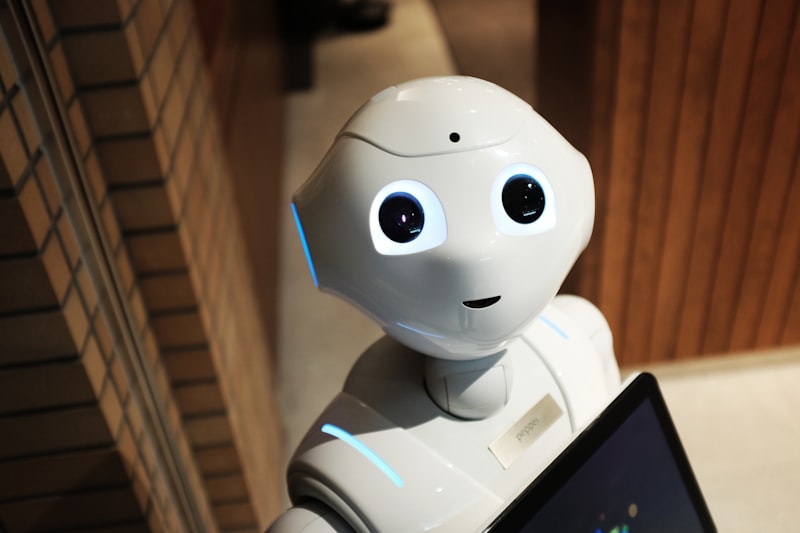
Artificial intelligence is reshaping every industry and aspect of life. From self-driving cars to drug discovery, AI is no longer science fiction -- it is our present and future. Here are 15 fascinating facts about AI that define where we are headed.
The Rise of Intelligent Machines
1. The term "artificial intelligence" was coined in 1956 at the Dartmouth Conference, where John McCarthy and other pioneers predicted that a machine as intelligent as a human would exist within a generation. While that timeline was overly optimistic, their foundational work launched the entire field of AI research.
2. Modern AI systems can now outperform humans at specific tasks including image recognition, speech transcription, and playing complex strategy games like Go. In 2016, DeepMind's AlphaGo defeated world champion Lee Sedol in a match that surprised even AI experts, demonstrating creative play that human observers described as "beautiful" and "intuitive."
3. The computing power used for the largest AI training runs has been doubling every 3.4 months since 2012. This exponential growth has enabled models like GPT-4, which was trained on an estimated 2.15 billion pages of text and can perform tasks ranging from legal document analysis to creative writing.
4. AI is now capable of generating photorealistic images from text descriptions using diffusion models. Systems like DALL-E, Midjourney, and Stable Diffusion have created images that have won art competitions, been used in advertising campaigns, and sparked intense debates about creativity and copyright.
AI Transforming Industries
5. In healthcare, AI systems can detect certain cancers in medical scans with accuracy equal to or exceeding trained radiologists. A 2020 study in Nature showed that an AI system developed by Google Health reduced false negatives in breast cancer screening by 9.4% and false positives by 5.7% compared to human radiologists.
6. The financial industry uses AI to process billions of transactions daily, detecting fraud patterns that would be impossible for humans to identify. Machine learning algorithms analyze spending patterns, location data, and behavioral biometrics to flag suspicious activity in real-time, saving billions in fraudulent charges annually.
7. Self-driving car technology has advanced to the point where autonomous vehicles have logged millions of miles on public roads. Waymo's fleet has driven over 20 million autonomous miles, and its robotaxis now operate without safety drivers in multiple U.S. cities including Phoenix, San Francisco, and Los Angeles.
8. AI-powered language translation now supports over 100 languages in real-time, breaking down communication barriers that existed for millennia. Google's Neural Machine Translation system processes over 100 billion words per day, and modern models can translate between language pairs they were never explicitly trained on -- a phenomenon called zero-shot translation.
The Science Behind AI
9. Neural networks are loosely modeled after the human brain, with artificial "neurons" organized in layers. A modern large language model can have over 175 billion parameters -- adjustable connections between neurons -- making them among the most complex systems ever built by humans.
10. Deep learning's breakthrough came in 2012 when a neural network called AlexNet won the ImageNet competition by a dramatic margin, reducing the error rate by over 10 percentage points compared to traditional computer vision methods. This moment is widely considered the beginning of the modern AI era.
11. Reinforcement learning -- where AI learns through trial and error with reward signals -- has been used to teach robots complex physical tasks. AI systems have learned to walk, manipulate objects, and even perform surgical procedures in simulation before transferring those skills to physical robots.
12. The transformer architecture, introduced in the 2017 paper "Attention Is All You Need," revolutionized AI by enabling models to process all parts of input data simultaneously rather than sequentially. This innovation underlies virtually all modern large language models and has been called one of the most important breakthroughs in AI history.
The Future and Challenges
13. AI systems currently consume enormous amounts of energy -- training a single large model can emit as much carbon as five cars over their entire lifetimes. Researchers are actively working on more efficient architectures and training methods to reduce AI's environmental footprint.
14. The field of AI safety and alignment is growing rapidly as researchers work to ensure that increasingly powerful AI systems remain beneficial to humanity. Leading AI labs now have dedicated safety teams, and governments worldwide are developing regulatory frameworks for AI development and deployment.
15. Experts predict that artificial general intelligence (AGI) -- AI that matches or exceeds human intelligence across most domains -- could arrive within decades. A 2022 survey of AI researchers found that the median estimate for when AGI would be achieved was 2059, though opinions varied widely. Whatever the timeline, the decisions made today about AI governance will shape humanity's future profoundly.