
The art of camouflage in the animal kingdom is one of nature's most astonishing evolutionary achievements. From color-changing cephalopods to insects that mimic leaves with uncanny precision, animals have developed remarkable strategies to hide, deceive, and survive.
Masters of Disguise
1. The mimic octopus (Thaumoctopus mimicus) is the undisputed champion of impersonation. It can not only change its color and texture but also contort its body to mimic up to 15 different species, including lionfish, sea snakes, and flatfish, choosing the appropriate disguise based on the threat it faces.
2. Cuttlefish possess the most sophisticated camouflage system in the animal kingdom. They have millions of pigment cells called chromatophores, controlled directly by their brain, allowing them to change color, pattern, and even skin texture in under a second.
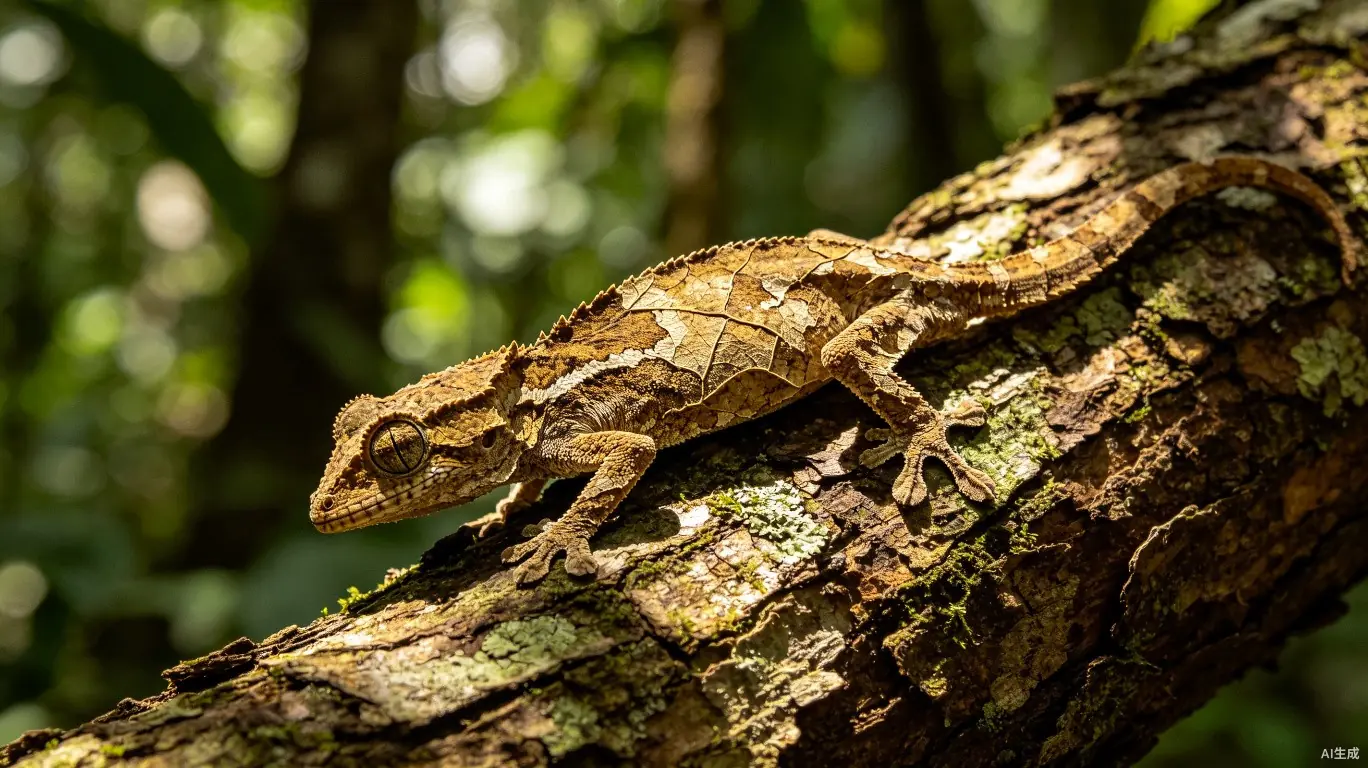
3. The leaf-tailed gecko of Madagascar has evolved a body that perfectly resembles a dead leaf, complete with irregular edges, vein-like patterns, and even a tail that looks like it has been nibbled by insects.
4. Chameleons primarily change color for communication and temperature regulation rather than camouflage. Their true camouflage secret lies in their slow, jerky movements that mimic leaves swaying in the wind.
Insect Illusionists
5. The orchid mantis takes camouflage to a deceptive extreme. Its body has evolved to look exactly like an orchid flower, complete with petal-shaped legs in pink and white, luring unsuspecting pollinators directly into its grasp.
6. Stick insects (Phasmatodea) are so convincing in their disguise that some species even sway gently back and forth to mimic a twig blowing in the breeze. The longest insect ever recorded is a stick insect measuring over 62 centimeters.
7. The dead leaf butterfly (Kallima inachus) has wings with an upper surface of brilliant blue and orange, but when closed, the underside looks exactly like a dried, brown leaf with a fake midrib, veins, and mold spots.
8. Peppered moths provided one of the most famous examples of natural selection in action. During the Industrial Revolution, dark-colored moths became dominant as soot blackened tree trunks, making the previously camouflaged light moths easy prey.
Marine Masters
9. The pygmy seahorse, barely 2 centimeters long, lives exclusively on gorgonian sea fans and has evolved tubercles and coloration that perfectly match its coral host. It was discovered entirely by accident in a laboratory.
10. Stonefish are the most venomous fish in the world and also among the best camouflaged. Their mottled bodies look exactly like algae-covered rocks on the seafloor, lying motionless for hours waiting for prey.
11. The flounder can change its coloration to match any seafloor in just 2 to 8 seconds. It uses visual information from its eyes -- if you cover one eye, only half its body changes color.
12. Frogfish have evolved to look exactly like sponges, algae-covered rocks, or specific types of coral. They use a modified dorsal fin spine as a lure to attract prey while remaining perfectly hidden.
Land Animal Experts
13. The snowy owl has pure white feathers that make it nearly invisible against Arctic snow. In summer, females retain darker barring for camouflage when some snow has melted.
14. Leopards use their rosette-patterned coat for disruptive coloration, breaking up their body outline so prey cannot recognize the distinctive shape of a predator in dappled forest light.
15. The Arctic fox undergoes one of the most dramatic seasonal transformations in nature -- pure white in winter, brown or grey in summer, completing the change in just a few weeks.
16. The potoo bird freezes during the day, stretching vertically to resemble a broken tree branch. Its mottled plumage and half-closed eyes that look like knots in wood make it nearly impossible to spot.
17. Tiger stripes serve a dual purpose. In golden grasses, their vertical stripes break up body outline so effectively that prey like deer -- with dichromatic vision -- struggle to distinguish the orange from green.
18. Some animals employ acoustic camouflage. The tiger moth produces ultrasonic clicks that jam a bat's echolocation, while certain caterpillars suppress their own scent to avoid detection by ants and wasps.