
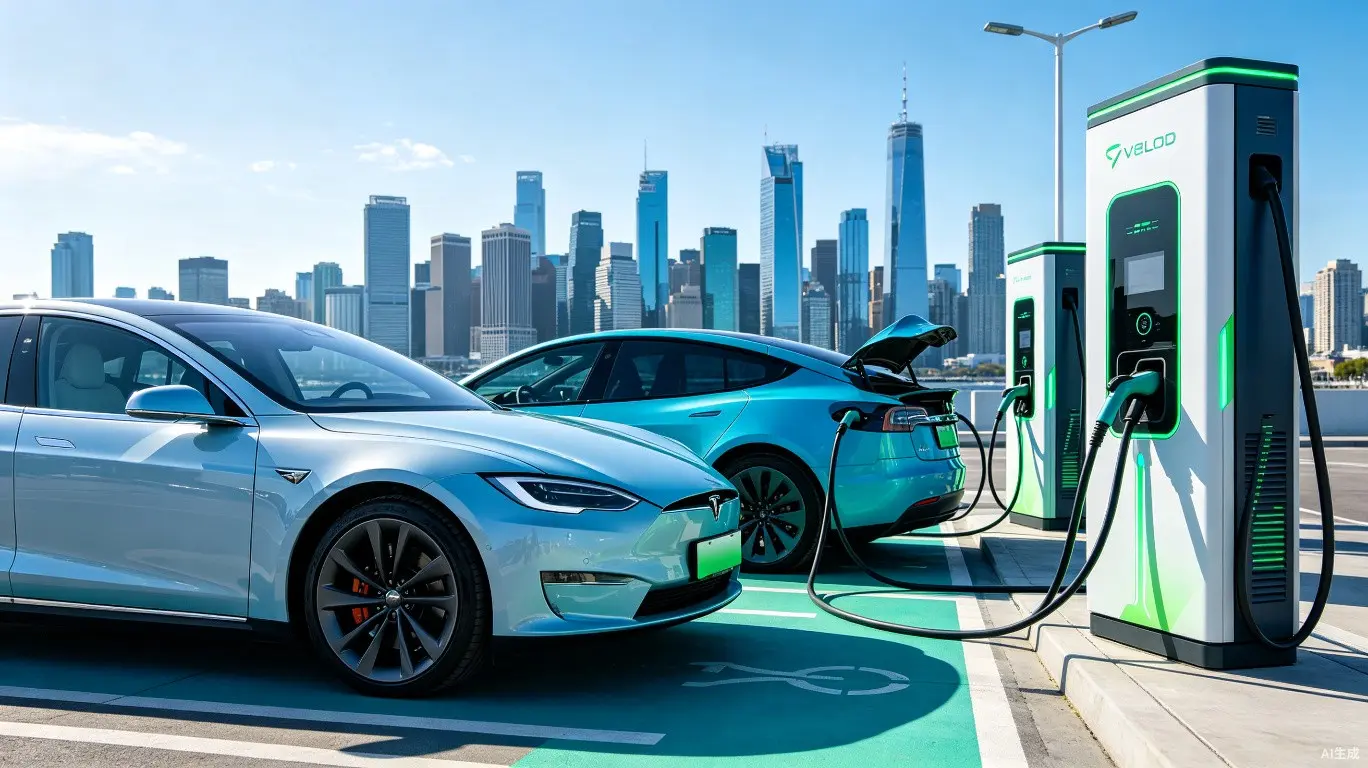
The electric vehicle revolution is no longer a prediction -- it is happening right now on roads around the world. From million-mile batteries to wireless charging highways, the pace of innovation in EV technology is transforming not just the automotive industry but the entire global energy landscape.
The Battery Revolution
1. Solid-state batteries entered mass production in 2025, offering energy densities 50% higher than the best lithium-ion cells while eliminating the flammable liquid electrolyte that poses fire risks. The first vehicles equipped with solid-state batteries achieved ranges exceeding 800 kilometers on a single charge, with charging times under 15 minutes for an 80% charge.
2. Lithium-iron-phosphate (LFP) batteries have surged to over 40% of the global EV battery market by 2026, thanks to their lower cost, longer cycle life, and superior safety profile compared to nickel-based chemistries. CATL's latest LFP cells achieve energy densities once thought impossible for the chemistry, narrowing the gap with premium alternatives.
3. Sodium-ion batteries entered commercial EV production in 2025 as a cheaper, more abundant alternative to lithium. While offering lower energy density, they perform better in cold temperatures and eliminate dependence on scarce minerals like cobalt and nickel. BYD began equipping its entry-level models with sodium-ion packs in early 2026.
4. Million-mile batteries have moved from laboratory promise to commercial reality. Independent testing in 2026 confirmed that next-generation LFP cells from multiple manufacturers retain over 80% of their original capacity after 15,000 charge-discharge cycles -- equivalent to driving 4.8 million kilometers or well over a century of typical use.
Charging Infrastructure
5. Global public EV charging points surpassed 25 million in 2026, more than tripling from just three years earlier. China alone accounts for over 60% of the total, but Europe and North America are accelerating deployment, with the U.S. adding an average of 900 new public charging ports per week in 2026.
6. Ultra-fast 800-volt charging architecture has become the industry standard for new EVs, enabling charging speeds of 400 kilometers of range in 10 minutes. Porsche, Hyundai, Kia, and Lucid led this transition, and by 2026 even mass-market models from Toyota and Volkswagen feature 800V systems.
7. Wireless inductive charging roads are being piloted in Sweden, Germany, and South Korea, with embedded coils beneath the asphalt transferring power to vehicles as they drive. The world's first permanent electrified highway, a 20-kilometer stretch near Stockholm, began continuous operation in 2025, allowing EVs to charge while moving at highway speeds.
8. Vehicle-to-grid (V2G) technology has turned EV batteries into distributed energy storage assets. In 2026, over 2 million EVs globally participate in grid-balancing programs, earning owners an average of $400 to $800 per year by selling stored electricity back to the grid during peak demand periods.
Market Transformation
9. Global EV sales exceeded 28 million units in 2025, representing over 25% of all new vehicle sales worldwide. In leading markets like Norway, EVs accounted for 96% of new car sales, while China's EV penetration reached 55% -- making internal combustion engine vehicles the minority choice for the first time in any major economy.
10. The total cost of ownership advantage for EVs over comparable gasoline vehicles has widened dramatically. By 2026, a typical compact EV costs $8,000 to $12,000 less to own over five years than its gasoline equivalent, factoring in lower fuel costs, reduced maintenance (EVs have fewer than 20 moving parts compared to over 2,000 in an internal combustion engine), and government incentives.
11. Electric trucks and commercial vehicles are rapidly electrifying, with Tesla Semi, Volvo FH Electric, and Mercedes eActros competing in the heavy-duty segment. In 2026, battery-electric trucks achieved a total cost per kilometer 15% lower than diesel on routes under 500 kilometers, driven by falling battery prices and rising diesel costs.
12. The used EV market has matured significantly, alleviating early concerns about depreciation. By 2026, three-year-old EVs retain approximately 65% of their original value -- comparable to gasoline vehicles -- as battery longevity data gives consumers confidence in long-term reliability.
Environmental Impact and Raw Materials
13. Battery recycling has scaled to industrial levels, with Redwood Materials, Li-Cycle, and others recovering over 95% of lithium, cobalt, and nickel from end-of-life batteries. Recycled battery materials now supply approximately 18% of global lithium demand, reducing the need for new mining operations.
14. Lifecycle analyses in 2026 confirm that even when charged on grids with significant fossil fuel content, EVs produce 50% to 70% fewer lifetime greenhouse gas emissions than equivalent gasoline vehicles. In regions with clean grids, the reduction exceeds 80%, and as grids decarbonize, every existing EV automatically becomes cleaner.
15. Direct lithium extraction (DLE) technologies have begun commercial deployment, promising to reduce the environmental footprint of lithium mining by 90% compared to traditional evaporation pond methods. DLE can extract lithium from brine in hours rather than months and uses far less water and land.
The Road Ahead
16. Multiple countries have set firm end dates for new internal combustion engine vehicle sales: Norway in 2025 (achieved), the EU and UK by 2035, California by 2035, and India by 2030 for certain categories. Over 35 national and regional governments now have binding phase-out targets covering more than 60% of the global auto market.
17. Electric aviation achieved a milestone in 2025 when the first certified electric commuter aircraft, the Eviation Alice, entered commercial service on routes under 500 kilometers. Meanwhile, hybrid-electric regional aircraft from Airbus and Rolls-Royce are targeting entry into service by 2028, potentially reducing short-haul aviation emissions by 40%.
18. The EV revolution is reshaping geopolitics, with lithium, cobalt, and rare earth processing becoming strategically as important as oil refining. Countries with domestic battery supply chains -- led by China, but increasingly the U.S. and EU through onshoring -- are gaining significant economic and strategic advantages in the new energy economy.