
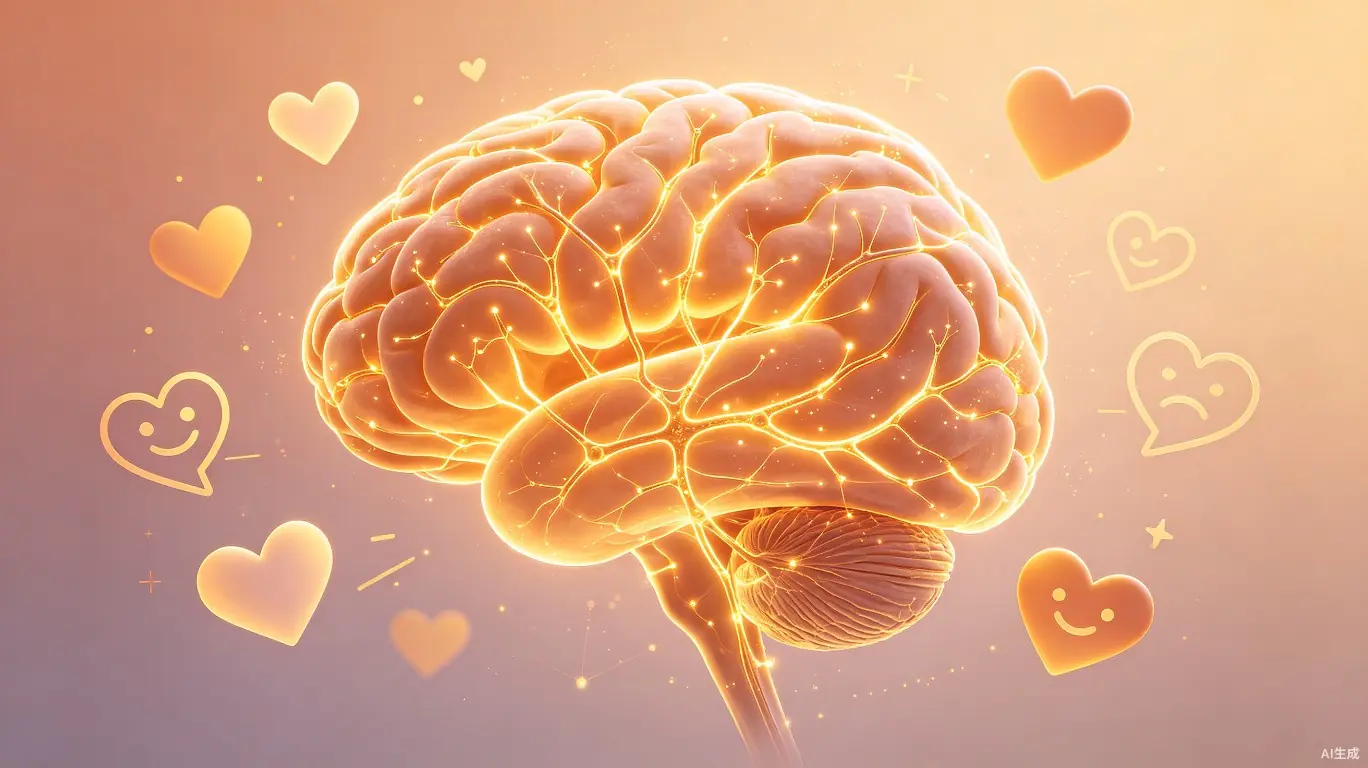
Emotional intelligence -- the ability to recognize, understand, and manage emotions in yourself and others -- may be the single most important predictor of success in life and work. While IQ measures cognitive ability, EQ determines how well you navigate the complex social world.
The Science of EQ
1. EQ was introduced by Peter Salovey and John Mayer in 1990 and popularized by Daniel Goleman's 1995 book. It encompasses five core components: self-awareness, self-regulation, motivation, empathy, and social skills.
2. Brain imaging shows people with higher EQ have greater connectivity between the prefrontal cortex (the "thinking brain") and the amygdala (the "emotional brain"), allowing them to process emotional information more effectively.
3. Unlike IQ, which stabilizes around age 18, emotional intelligence can be developed throughout life. Neuroplasticity means that practicing emotional skills literally rewires your brain.
4. The Carnegie Institute of Technology found that 85% of financial success comes from skills in communication, negotiation, and leadership -- core EQ components. Only 15% is due to technical knowledge.
Workplace Impact
5. TalentSmart tested EQ alongside 33 other workplace skills and found it was the strongest predictor of performance, explaining 58% of success across all job types -- more important than IQ or experience.
6. Managers with high EQ create more engaged, innovative teams with lower turnover. Employees don't quit jobs -- in most cases, they quit bosses who lack empathy and self-awareness.
7. In a study of over one million people worldwide, the top 10% of performers had one thing in common: high EQ. They weren't necessarily the smartest, but they were best at managing emotions and connecting with others.
8. Companies prioritizing EQ in hiring and training see a 20% average productivity increase and up to 40% decrease in turnover -- the financial return on EQ development is substantial and measurable.
Health and Relationships
9. People with high EQ have significantly lower cortisol (stress hormone) levels. Better emotional regulation means their bodies spend less time in the damaging "fight or flight" state.
10. EQ is a stronger predictor of marital satisfaction than personality, shared interests, or communication style. High-EQ couples navigate conflicts constructively and report greater long-term happiness.
11. The ability to accurately read facial expressions predicts relationship quality better than any other single skill. People who misread their partner's emotions are four times more likely to experience relationship breakdown.
12. High EQ correlates with better physical health: stronger immune systems, lower blood pressure, and faster illness recovery -- likely due to better stress management and stronger social support networks.
Development and Future
13. Children receiving EQ training in school show improved academic performance, fewer behavioral problems, and reduced anxiety. These benefits last well into adulthood.
14. The "marshmallow test" -- where delaying gratification predicted better life outcomes -- is fundamentally a test of emotional regulation, showing that EQ established in childhood has lifelong consequences.
15. Empathy has a neurological basis in mirror neurons, which fire both when performing an action and when observing someone else doing it -- creating a direct neural bridge between self and other.
16. EQ is not about being "nice" or suppressing negative emotions. The most emotionally intelligent people are comfortable with the full range of feelings and experience them without being controlled by them.
17. Technology may be eroding EQ. Studies show screen time reduces face-to-face interaction essential for developing empathy. Children with more device time score lower on emotional recognition tests.
18. As AI takes over cognitive tasks, uniquely human skills like emotional understanding, empathy, and relationship-building will become the most valued abilities in the workforce -- and in life.