
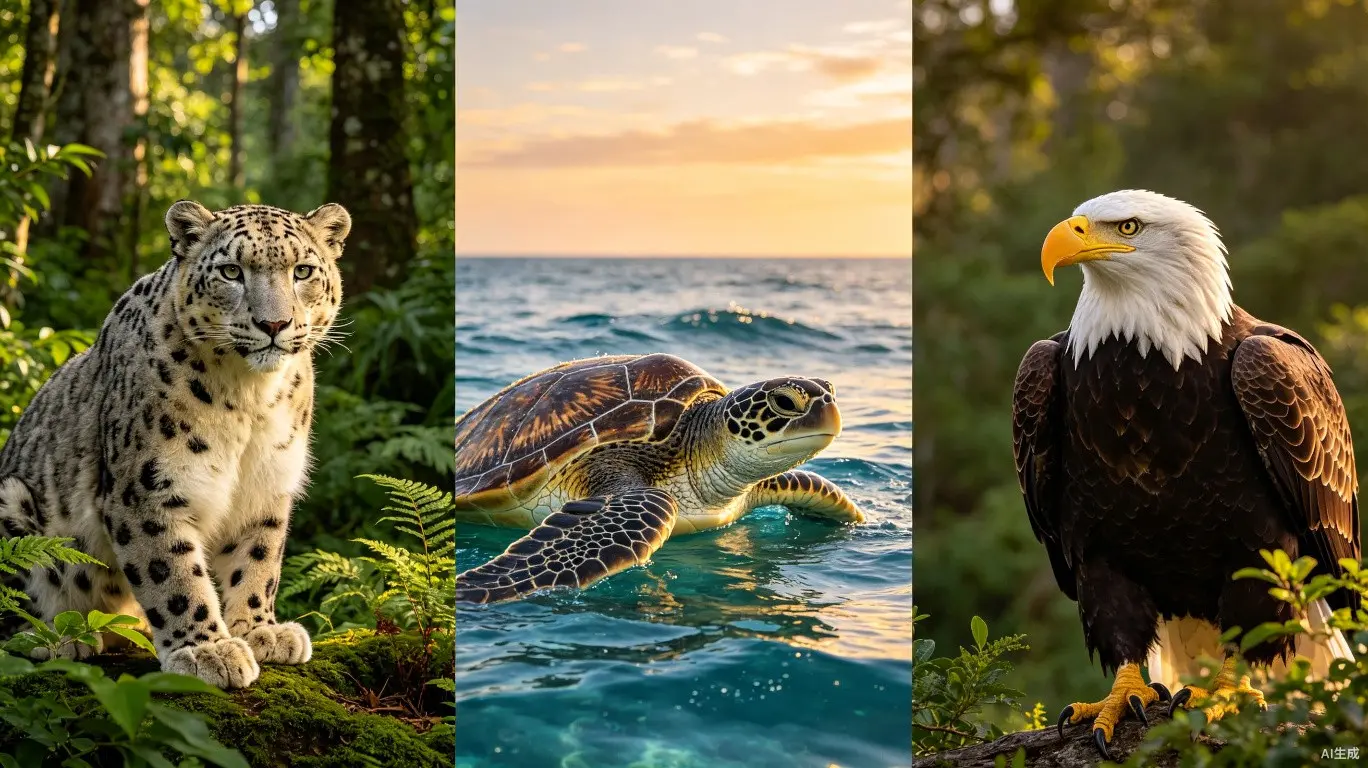
The fight to save endangered species is one of the most urgent and inspiring stories of our time. While extinction rates remain alarmingly high, dedicated conservation efforts around the world have achieved remarkable recoveries -- proving that with science, commitment, and community action, we can bring species back from the brink.
Remarkable Comebacks
1. The giant panda was officially downlisted from "Endangered" to "Vulnerable" by the IUCN in 2021, and by 2026 the wild population has grown to over 2,200 individuals -- more than double the count from the 1980s. China's creation of 67 panda reserves and ambitious reforestation programs have been the cornerstone of this success.
2. The California condor, which dwindled to just 27 individuals in 1987, has made an astonishing recovery to over 560 birds by 2026, with more than 340 flying free in the wild. Captive breeding programs, lead ammunition bans, and intensive monitoring have been critical to this comeback.
3. The Arabian oryx, once extinct in the wild, has been successfully reintroduced to deserts in Oman, Saudi Arabia, and the UAE. By 2026, over 1,200 individuals roam freely, making it the first animal species ever to be downgraded from "Extinct in the Wild" to "Vulnerable" through captive breeding and reintroduction.
4. Sea turtle populations are showing encouraging trends globally. In Florida, green turtle nesting has increased by over 2,000% since the 1970s due to nest protection programs, fishing gear modifications, and coastal lighting regulations that prevent hatchling disorientation.
Innovative Conservation Technologies
5. Environmental DNA (eDNA) technology now allows conservationists to detect the presence of rare species from a single liter of water or handful of soil. In 2025, eDNA sampling in the Mekong River revealed surviving populations of the critically endangered giant softshell turtle in areas previously thought devoid of the species.
6. AI-powered camera traps and acoustic monitors have revolutionized wildlife monitoring. In 2026, machine learning algorithms trained on millions of images can identify individual animals by their unique markings with over 98% accuracy, allowing researchers to track populations without physically capturing or tagging animals.
7. Drone technology equipped with thermal imaging has transformed anti-poaching efforts. In African parks using drone surveillance, rhino poaching incidents dropped by 67% between 2023 and 2026, as poachers can no longer operate under cover of darkness without detection.
8. De-extinction science has made significant if controversial advances. In 2025, scientists successfully produced viable embryos of the northern white rhinoceros using frozen sperm and eggs from the last surviving individuals, implanted into southern white rhino surrogates. The first calf is expected in 2027.
Habitat Restoration Success Stories
9. The Atlantic Forest of Brazil, once reduced to just 7% of its original extent, has seen over 1.5 million hectares restored since 2010 through a coalition of government agencies, NGOs, and local communities. Jaguar, golden lion tamarin, and harpy eagle populations are all rebounding as a result.
10. Coral reef restoration using "micro-fragmentation" techniques has achieved growth rates up to 50 times faster than natural coral growth. In the Florida Keys, threatened elkhorn and staghorn corals planted using this method have reached reproductive size in just three years instead of the typical 50 to 75 years.
11. The European bison, extinct in the wild by 1927, now numbers over 9,500 individuals across 20 countries. Rewilding initiatives in Poland, Romania, and the Netherlands have demonstrated that large herbivores can be successfully restored to landscapes long after their disappearance, bringing ecological benefits including seed dispersal and grassland maintenance.
12. Mangrove restoration has become one of the most cost-effective conservation strategies, with over 2,000 square kilometers restored globally between 2020 and 2026. Mangroves not only provide critical nursery habitat for fish and crustaceans but also sequester carbon at rates up to four times greater than terrestrial forests.
Community-Led Conservation
13. Namibia's communal conservancy model, where local communities manage wildlife and receive direct economic benefits from tourism and sustainable hunting, has led to the recovery of desert-adapted lions, black rhinos, and elephants. Over 45% of Namibia's land area is now under some form of community conservation management.
14. In Nepal, community-based anti-poaching units and wildlife corridors have helped tiger populations nearly triple since 2010, reaching over 355 individuals by 2025. Nepal became the first country to achieve the global TX2 goal of doubling wild tiger populations, demonstrating that community engagement is essential for large carnivore conservation.
15. Indigenous-managed lands harbor approximately 80% of the world's remaining biodiversity, according to a landmark 2025 study. Territories managed by Indigenous peoples in the Amazon have deforestation rates 50% lower than adjacent areas, underscoring the critical role of traditional ecological knowledge in modern conservation.
Challenges and the Road Ahead
16. Despite conservation successes, the global extinction rate remains 100 to 1,000 times higher than the natural background rate. Over one million species face extinction risk, according to the latest UN assessment, with habitat loss, climate change, and invasive species as the primary drivers.
17. Climate change is creating "conservation refugees" -- species that must shift their ranges faster than they can physically move. Assisted migration, the deliberate translocation of species to cooler habitats, has moved from a fringe idea to an accepted conservation tool, with over 200 documented assisted migration projects underway globally by 2026.
18. The Kunming-Montreal Global Biodiversity Framework, adopted in 2022, set the ambitious goal of protecting 30% of Earth's land and oceans by 2030. By 2026, protected area coverage has increased from 17% to 23% of land and from 8% to 14% of oceans, with accelerated progress needed to meet the 2030 target.