
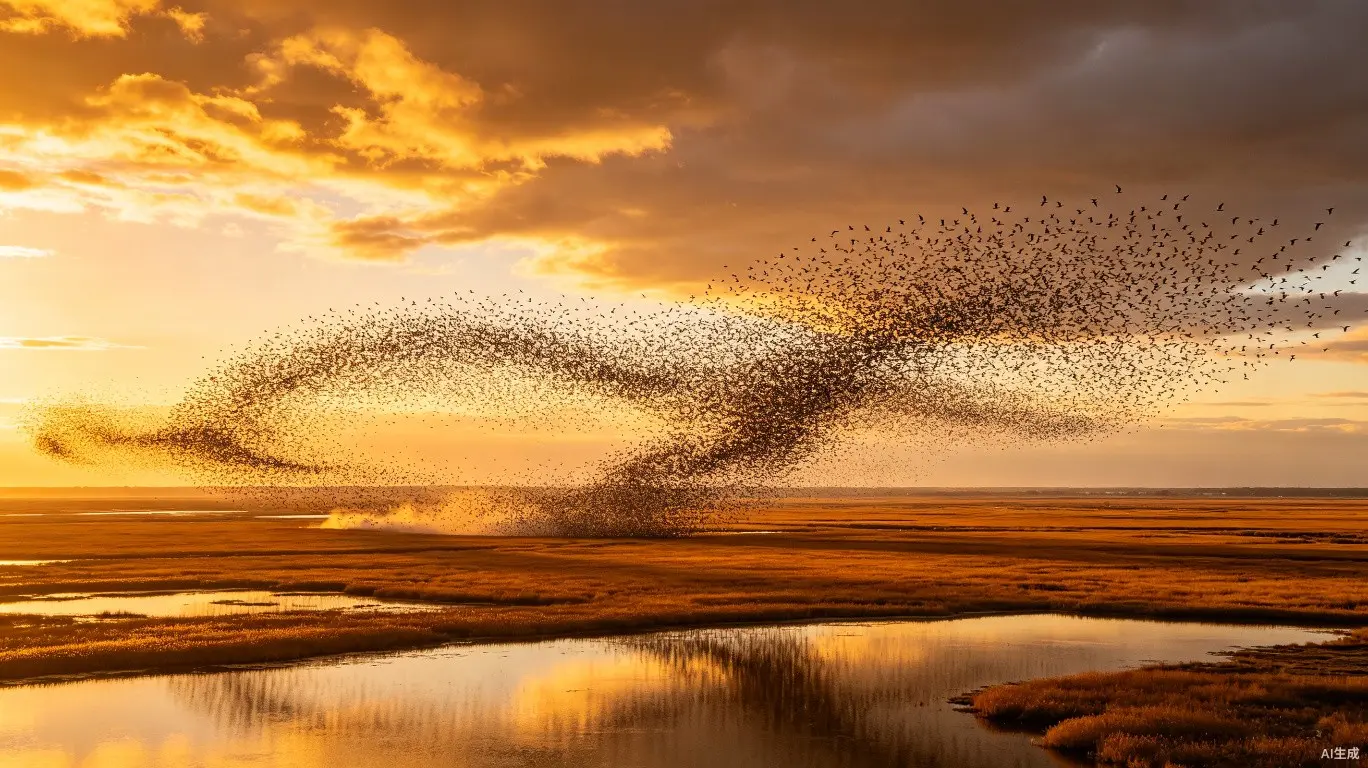
Animal migration is one of the most spectacular natural phenomena on Earth. From the Arctic Tern's pole-to-pole journey to the monarch butterfly's multi-generational odyssey, these incredible journeys span thousands of miles and reveal the astonishing navigational abilities of creatures both large and small.
Marathon Migrators
1. The Arctic Tern holds the record for the longest migration of any animal. These small seabirds travel from their Arctic breeding grounds to Antarctica and back each year, covering up to 90,000 kilometers (56,000 miles) annually. Over its 30-year lifespan, an Arctic Tern may fly the equivalent of three round trips to the Moon.
2. Bar-tailed Godwits make the longest non-stop flight of any bird, flying over 11,000 kilometers (6,800 miles) from Alaska to New Zealand in a single journey lasting eight to nine days without food, water, or rest. They shrink their internal organs before departure to reduce weight and expand them upon arrival.
3. The great wildebeest migration in East Africa involves approximately 1.5 million wildebeest, along with hundreds of thousands of zebras and gazelles, moving in a continuous clockwise loop across the Serengeti and Masai Mara ecosystems covering roughly 1,600 kilometers (1,000 miles) each year.
Extraordinary Navigation
4. Monarch butterflies navigate using a combination of a sun compass in their antennae and an internal magnetic compass. Remarkably, the butterflies that migrate south to Mexico in the fall have never been there before -- they are three to five generations removed from the previous year's migrants, yet they return to the exact same forests.
5. Sea turtles use Earth's magnetic field to navigate across entire ocean basins. After hatching on a beach, loggerhead turtles embark on a 15,000-kilometer migration around the North Atlantic gyre, returning to their natal beaches decades later to lay eggs, guided by the unique magnetic signature of their birthplace.
6. Salmon famously return from the ocean to the exact stream where they were born to spawn, navigating using their extraordinary sense of smell. They can detect a single drop of water from their home stream among millions of gallons of ocean water, following the unique chemical signature imprinted in their memory as juveniles.
Epic Journeys by Unlikely Travelers
7. Dragonflies undertake one of the longest insect migrations known. The globe skimmer dragonfly travels up to 18,000 kilometers from India to East Africa and back across the Indian Ocean, a feat that requires multiple generations to complete the full circuit.
8. Humpback whales undertake the longest mammalian migration, traveling up to 16,000 kilometers (10,000 miles) annually between polar feeding grounds and tropical breeding waters. They can navigate with remarkable precision, returning to the same feeding areas year after year across vast, featureless expanses of open ocean.
9. The Christmas Island red crab migration is one of the most dramatic spectacles in nature. Each year, over 50 million red crabs migrate from the island's forests to the coast to breed, turning the landscape crimson. The migration is triggered by the first rainfall of the wet season and precisely timed to the lunar cycle.
How Migration Works
10. Many migratory birds undergo dramatic physiological changes before migration, a state called hyperphagia. They consume massive amounts of food, sometimes doubling their body weight in just days. Some species can increase their fat stores to over 50% of their total body mass.
11. Migrating birds often fly in V-formation to conserve energy. Each bird positions itself slightly behind and to the side of the bird in front, taking advantage of the upward-moving air created by the wingbeats ahead. This aerodynamic positioning can reduce energy expenditure by up to 20%.
12. Scientists track migration using increasingly sophisticated technology, including satellite transmitters weighing less than 5 grams, geolocators that record light levels to determine position, and even radar networks that can track entire flocks of birds as they move across continents.
Migration Under Threat
13. Climate change is disrupting migration timing across species. Many birds are arriving at breeding grounds earlier than food sources peak, creating ecological mismatches. In some European bird populations, spring arrival dates have shifted forward by up to two weeks in recent decades.
14. Light pollution from cities disorients nocturnal migrants, causing millions of birds to collide with buildings each year. Simple changes, such as turning off building lights during migration seasons, can reduce bird deaths by up to 80%.
15. Habitat loss along migration routes creates critical bottlenecks. Shorebirds that migrate along the East Asian-Australasian Flyway have declined by up to 75% in recent decades, largely because of the loss of crucial coastal stopover sites where birds refuel during their journeys.
Fascinating Discoveries
16. Recent research has shown that some species adapt their migration routes incredibly fast. Blackcaps, small European warblers, have established a new migration route from central Europe to the United Kingdom in just decades, a route that did not exist historically, in response to warmer winters and the availability of garden bird feeders.
17. Zebra migrations in Botswana were discovered to be the longest mammal migration in Africa, covering up to 500 kilometers (310 miles) round trip. The discovery in 2014 shattered previous assumptions about migration in the region.
18. Some migratory species carry with them entire ecosystems. Migratory birds and fish transport nutrients across vast distances as they feed in one location and deposit waste in another. Salmon, for example, bring marine-derived nitrogen and phosphorus from the ocean to inland forests when they spawn and die, fertilizing the ecosystem that sustains the next generation.