
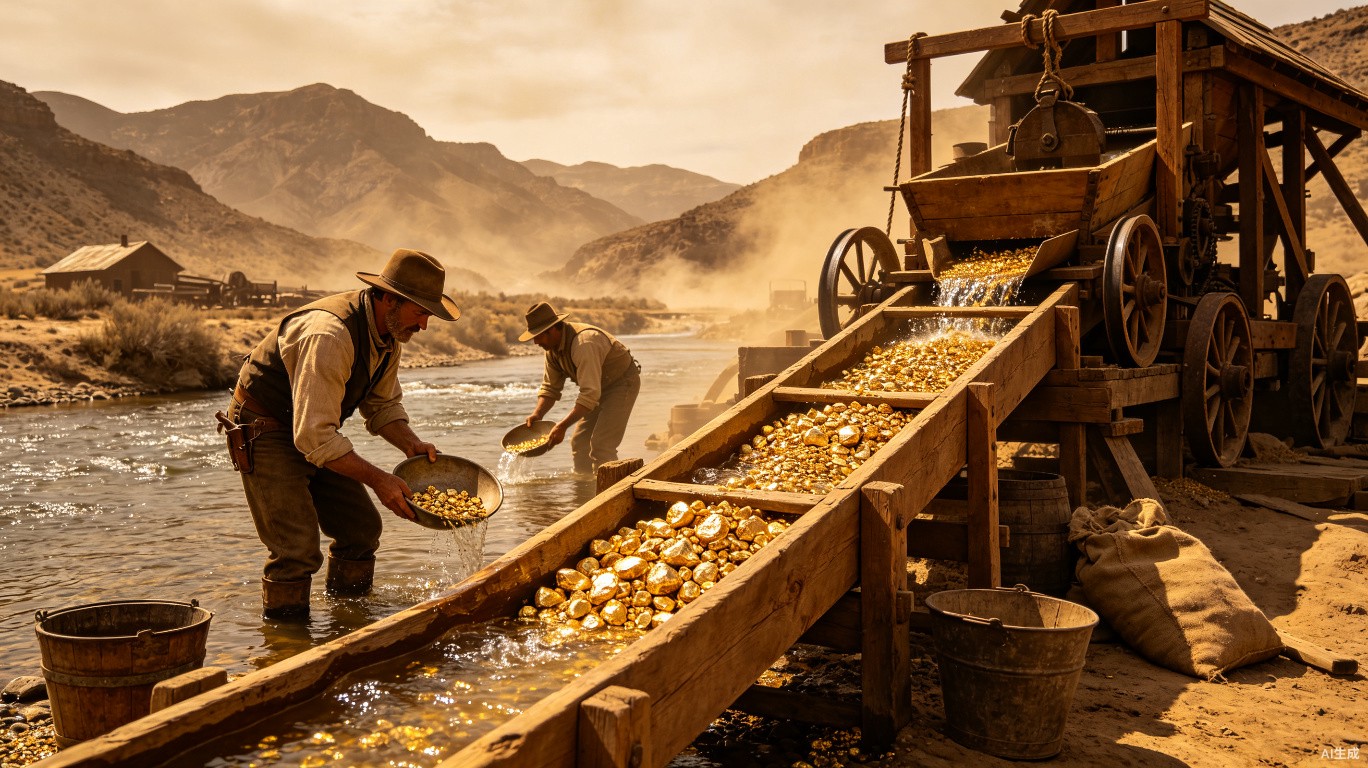
Gold rushes reshaped entire continents, created instant cities, and transformed ordinary people into millionaires overnight. But behind the romanticized tales of fortune seekers lie stories of exploitation, environmental devastation, and some of history''s most improbable twists of fate.
The Great Gold Rushes
1. The California Gold Rush began on January 24, 1848, when James W. Marshall discovered gold flakes in the American River at Sutter''s Mill. By 1855, over 300,000 people had migrated to California -- increasing the territory''s population by a factor of 20.
2. The Australian gold rushes, starting in 1851, tripled Australia''s population in just 20 years. The Victorian goldfields alone produced over 2,500 metric tons of gold -- about one-third of all the gold ever mined worldwide up to that point.
3. The Klondike Gold Rush of 1896-1899 sent 100,000 prospectors into the Yukon wilderness, but only about 30,000 completed the grueling journey over treacherous mountain passes. Fewer than 4,000 of those actually found gold.
4. The Witwatersrand Gold Rush in South Africa, beginning in 1886, was by far the largest. This single region has produced over 1.5 billion ounces of gold -- roughly 40% of all the gold ever mined in human history. The city of Johannesburg sprang up from a tent camp to a metropolis in just a few years.
The Fortunes and Failures
5. The people who consistently got rich during gold rushes were rarely the miners themselves. Shopkeepers, saloon owners, and suppliers of mining equipment made far more reliable profits. Levi Strauss, for instance, made his fortune selling durable denim pants, not digging for gold.
6. The largest gold nugget ever found, the "Welcome Stranger," was discovered in 1869 in Victoria, Australia, weighing 72 kilograms (2,315 troy ounces). The discoverers, John Deason and Richard Oates, received roughly 9,300 pounds -- equivalent to about 1.5 million dollars today.
7. Sam Brannan became California''s first gold rush millionaire without ever mining. He bought up all the mining supplies in the region before publicly announcing the gold discovery, then sold shovels, picks, and pans at enormous markups to the arriving hordes.
8. An estimated 80% of the gold in the world remains unmined. It is either too deep, too expensive to extract, or locked in seawater -- the oceans contain roughly 20 million tons of dissolved gold.
Human Cost and Conflict
9. The California Gold Rush was catastrophic for Native Americans. Before 1848, California had an estimated 150,000 Native Americans. By 1870, fewer than 30,000 remained, decimated by disease, violence, and displacement from their lands.
10. Chinese immigrants formed a significant part of the gold rush workforce, making up about 25% of miners in California by 1852. They faced violent discrimination, exclusionary taxes like the Foreign Miners Tax, and were often forced to rework abandoned claims considered depleted by white miners.
11. The Eureka Stockade of 1854 was a miners'' rebellion in Ballarat, Australia, protesting expensive mining licenses and lack of voting rights. Though militarily defeated, it led to major democratic reforms and is considered a foundational moment in Australian democracy.
12. During the Klondike Gold Rush, the North-West Mounted Police required every prospector to carry a full year''s worth of supplies -- about one ton of goods -- before entering Canadian territory, dramatically reducing starvation deaths.
Lasting Impact
13. The California Gold Rush accelerated American westward expansion so dramatically that California skipped the territorial stage entirely, becoming a state in 1850 just two years after gold was discovered.
14. Gold rush-era hydraulic mining washed away entire mountainsides with high-pressure water cannons. In California''s Sierra Nevada, this practice sent 1.5 billion cubic yards of debris into rivers, raising riverbeds, flooding farmland, and leading to one of America''s first major environmental lawsuits in 1884.
15. Many modern cities owe their existence to gold rushes: San Francisco, Denver, Johannesburg, Melbourne, and Vancouver all experienced explosive growth fueled by nearby gold discoveries.
16. The gold standard -- where currencies were directly linked to gold -- was partly a legacy of the gold rush era. The massive influx of gold into global markets fundamentally transformed the world''s monetary systems throughout the 19th and early 20th centuries.
17. Some of the gold mined during the California Gold Rush ended up in the gilded decorations of European palaces and the gold leaf of countless religious artworks, physically connecting sacred art to the rough-and-tumble mining camps of the American West.
18. The last major gold rush occurred as recently as the 1980s, when a deposit discovered in the Amazon triggered Brazil''s Serra Pelada gold rush. At its peak, over 100,000 miners worked in a hand-dug pit that reached 200 meters deep, creating one of the most dangerous and chaotic mining operations in modern history.