
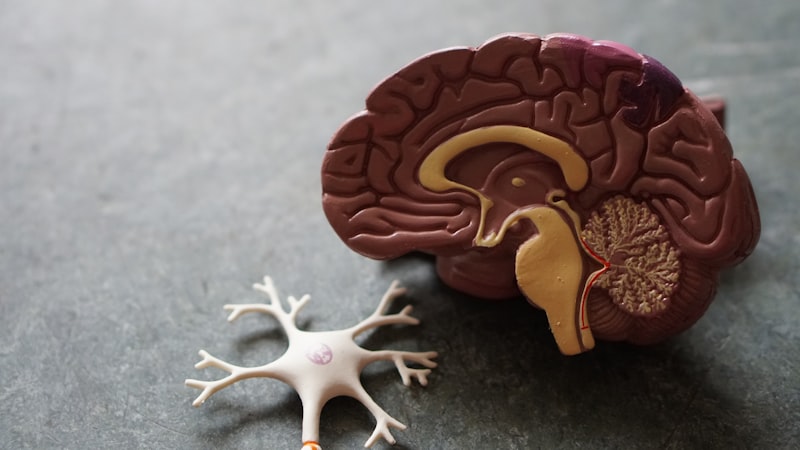
The human brain is the most complex object in the known universe. From neuroplasticity to consciousness, these facts about your own mind will leave you stunned.
Brain Architecture
1. The human brain contains approximately 86 billion neurons, each connected to thousands of others through synapses. The total number of connections in your brain is estimated to be around 100 trillion -- more than the number of stars in the Milky Way galaxy. These connections form the basis of every thought, memory, and emotion you experience.
2. Despite accounting for only about 2% of your body weight, the brain consumes roughly 20% of your body's total energy. That's about 400 calories per day dedicated solely to keeping your brain running. Even when you're sleeping, your brain is an energy hog, burning through glucose and oxygen at an astonishing rate.
3. The brain is approximately 73% water. Even mild dehydration -- as little as 1-2% fluid loss -- can impair cognitive function, affecting concentration, short-term memory, and mood. Staying hydrated is one of the simplest ways to support optimal brain performance.
4. The cerebral cortex, the wrinkled outer layer of the brain, is only about 2-4 millimeters thick but contains roughly 16 billion neurons. If you could unfold it flat, it would cover an area of about 2.5 square feet -- roughly the size of a small tablecloth. Those wrinkles exist precisely to pack more surface area into the confined space of the skull.
5. Your brain generates enough electricity to power a small LED light bulb -- about 12 to 25 watts when awake. This electrical activity is what EEG machines detect, and it's produced by neurons firing electrical signals at speeds up to 268 miles per hour along myelinated axons.
Memory and Learning
6. The brain's theoretical storage capacity is estimated at around 2.5 petabytes -- equivalent to approximately 3 million hours of TV shows. This enormous capacity arises from the combinatorial power of synaptic connections: with roughly 100 trillion synapses, the patterns of connectivity create an almost unfathomable number of potential memory states.
7. Memories are not stored in a single location but distributed across networks of neurons throughout the brain. The hippocampus acts as a kind of 'index' for memories, but the actual sensory components -- what something looked like, sounded like, smelled like -- are stored in the corresponding sensory cortices. When you recall a memory, your brain essentially reconstructs it from these scattered pieces.
8. Neuroplasticity means your brain physically changes every time you learn something new. When you acquire a new skill or piece of knowledge, your neurons form new connections, strengthen existing ones, and even generate new neurons in certain regions like the hippocampus. This process, called long-term potentiation, is the cellular basis of learning and continues throughout your entire life.
9. The brain can process an image seen for as little as 13 milliseconds. In a study at MIT, researchers found that the human brain can identify an image it has seen for only a fraction of a second, far faster than previously thought. This rapid processing occurs in the visual cortex and demonstrates the brain's extraordinary efficiency at pattern recognition.
Consciousness and Sleep
10. During REM (rapid eye movement) sleep, your brain is almost as active as when you're awake. REM sleep is when most vivid dreaming occurs, and the brain's visual, motor, and emotional centers light up with activity. However, the prefrontal cortex -- responsible for logic and self-awareness -- becomes less active, which helps explain why dreams often feel so bizarre and illogical.
11. The brain cleans itself during sleep through the glymphatic system. During deep sleep, cerebrospinal fluid flows through the brain in rhythmic pulses, flushing out toxic waste products including beta-amyloid proteins associated with Alzheimer's disease. This is one reason chronic sleep deprivation is linked to an increased risk of neurodegenerative disorders.
12. Your brain can generate entirely new ideas by combining existing concepts in novel ways -- a process called conceptual blending. This ability is what allows humans to imagine things that don't exist, from unicorns to interstellar travel. It's also the foundation of creativity in art, science, and technology.
13. The brain operates on a delay: it takes about 80 milliseconds for sensory information to reach conscious awareness after it's received by your sense organs. Your brain constructs your experience of the present moment from slightly outdated information, constantly predicting what's happening next to compensate for this lag.
Surprising Brain Facts
14. Your brain has no pain receptors -- it cannot feel pain. That's why neurosurgeons can perform brain surgery on awake patients. The brain itself is insensate; headaches are caused by pain-sensitive structures surrounding the brain, such as blood vessels, meninges, and muscles.
15. The brain's information processing speed varies by task but can be remarkably fast. Individual neurons can fire up to 200 times per second, and signals travel at different speeds depending on the type of nerve fiber. Some myelinated fibers transmit signals at over 100 meters per second.
16. The left and right hemispheres of the brain are connected by the corpus callosum, a bundle of about 200 million nerve fibers. This 'information superhighway' allows the two hemispheres to communicate and coordinate. In rare cases of severe epilepsy, surgeons may sever the corpus callosum, leading to fascinating split-brain phenomena where each hemisphere operates semi-independently.
17. The human brain reached its current size around 300,000 years ago, but it has actually shrunk by about 10% over the last 20,000 years -- roughly the size of a tennis ball. Scientists debate why: some argue it reflects increased efficiency, while others suggest changes in social structure and specialization reduced the cognitive demands on individuals.
18. Your brain is uniquely identifiable: the pattern of folds in your cerebral cortex is as distinctive as a fingerprint. No two brains have exactly the same folding pattern, though the overall structure follows the same blueprint. This uniqueness is influenced by genetics, environment, and life experience.