
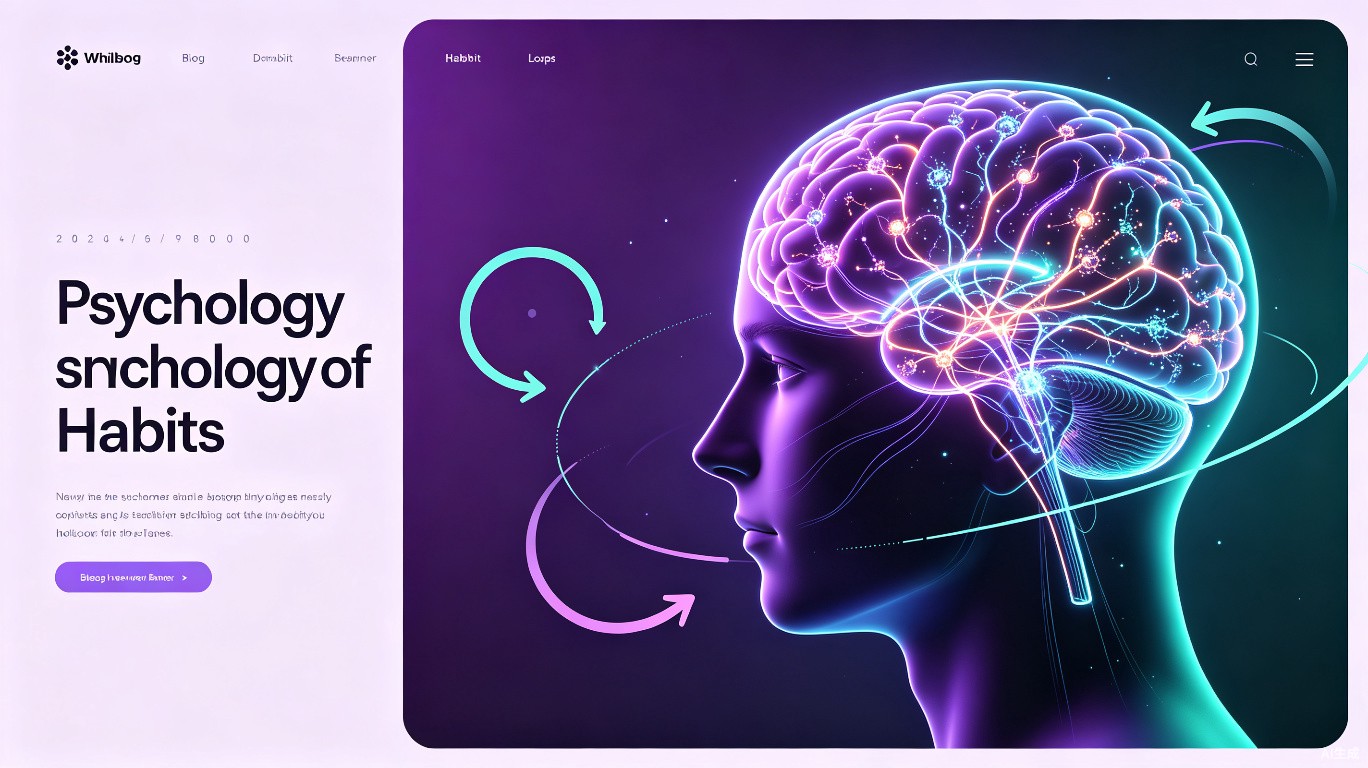
Habits govern nearly half of your daily actions, yet most people misunderstand how they actually work. The science of habit formation reveals that changing your behavior is less about willpower and more about rewiring deeply embedded neural circuits -- a process that is both more challenging and more achievable than you think.
The Science of Habit Formation
1. Habits make up approximately 40-45% of your daily behaviors, according to research by Wendy Wood at the University of Southern California. You perform most of these habitual actions without conscious awareness.
2. The habit loop, identified by researchers at MIT, consists of three components: a cue (trigger), a routine (behavior), and a reward. This neurological loop becomes more automatic with each repetition, eventually embedding itself in the basal ganglia.
3. Contrary to the popular "21 days to form a habit" myth, researchers at University College London found that it takes an average of 66 days for a new behavior to become automatic, with a range of 18 to 254 days depending on the person and the complexity of the behavior.
4. Once a habit forms, the brain essentially outsources it. The prefrontal cortex -- responsible for conscious decision-making -- becomes less active during habitual behaviors, freeing up mental energy for other tasks. This is why you can drive home on "autopilot."
Breaking and Building Habits
5. You cannot truly erase a bad habit. The neural pathways that encode habitual behaviors remain in the brain permanently. What you can do is build stronger competing pathways -- effectively overwriting the old habit with a new one through consistent repetition.
6. The "golden rule of habit change," proposed by Charles Duhigg, states that you should keep the same cue and reward but change the routine. If stress (cue) triggers snacking (routine) for comfort (reward), you might replace snacking with a short walk that provides the same stress relief.
7. Willpower is a limited resource that depletes throughout the day -- a phenomenon called ego depletion. This is why you are more likely to stick to good habits in the morning and more likely to succumb to bad habits in the evening.
8. Implementation intentions dramatically increase habit success. People who specifically plan when and where they will perform a new habit -- "I will exercise at 7 AM in the living room" -- are two to three times more likely to follow through than those with vague goals.
Environmental and Social Factors
9. Your environment shapes your habits far more than motivation does. People who keep fruit visible on their counter are significantly more likely to eat fruit, while people who keep junk food within easy reach consume far more of it -- regardless of their stated intentions.
10. Social norms are one of the most powerful drivers of habit formation. If your close friends adopt a new habit, your probability of adopting it increases dramatically. Obesity, smoking cessation, and exercise habits all spread through social networks like contagions.
11. The "fresh start effect" shows that people are significantly more likely to successfully adopt new habits at temporal landmarks -- the beginning of a new week, month, year, or after a birthday. These moments create psychological separation from past failures.
12. Friction is the enemy of good habits. Reducing the effort required to perform a desired behavior by even a few seconds dramatically increases adherence. Putting your gym clothes next to your bed the night before makes you far more likely to exercise in the morning.
The Neurological Perspective
13. Dopamine is released not just when you receive a reward but also when you anticipate one. This anticipation spike is what drives habit formation -- your brain learns to crave the reward even before the behavior begins, creating a powerful motivational loop.
14. Stress dramatically amplifies habitual behavior. When you are stressed, the brain shifts control from the goal-directed prefrontal cortex to the habit-driven basal ganglia, making you far more likely to revert to old patterns -- even ones you consciously want to avoid.
15. Sleep plays a critical role in habit consolidation. During deep sleep, the brain strengthens the neural connections associated with the day''s repeated behaviors. Poor sleep not only reduces willpower but also impairs the brain''s ability to encode new habits.
16. The anterior cingulate cortex monitors conflict between intended and habitual actions. In highly habitual people, this brain region becomes less sensitive over time, making them less aware of when they are slipping back into old patterns.
17. Habit replacement is most effective when you practice the new behavior in the exact context where you want it to occur. Context-dependent learning means that practicing meditation in your car won''t necessarily help you meditate at your desk -- the brain links habits to specific environmental cues.
18. The most successful habit changers focus on identity rather than outcomes. People who think "I am a runner" are far more likely to maintain an exercise routine than those who think "I want to run a marathon." Identity-based habits become self-reinforcing because maintaining the behavior affirms who you believe yourself to be.